


Review Your Setup
You’re one step closer to a healthier workday.
Your cart is empty
You’re one step closer to a healthier workday.
Your cart is empty
Posted by Gavin Bradley | Nov 28, 2025
Most home office setups are designed around comfort and equipment. Few are designed around movement. Yet research now shows that adding regular movement to your working day — not a full exercise programme, just more frequent position changes and short activity breaks — has a measurable effect on mood, stress levels, cognitive performance and how you feel about your workspace. Gavin Bradley, founder of Get Britain Standing and Active Working CIC, has spent over a decade making this case to employers and individuals across the UK. The science behind it continues to strengthen.
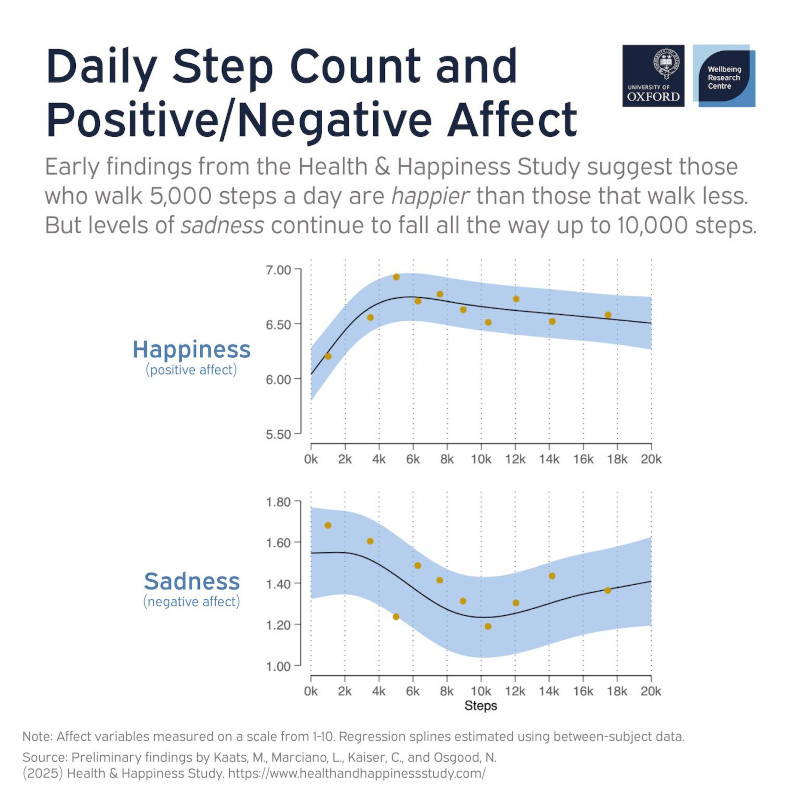
The science: more movement means better mood and less stressResearch from Oxford University’s Wellbeing Research Centre shows that people who walk more during the day — particularly those who reach 5,000 steps or more — report higher levels of happiness and lower levels of stress. Critically, even small increases in movement throughout the day produce measurable improvements, not just dedicated exercise sessions.
This aligns with the Public Health England expert statement on sedentary behaviour, which recommends that office workers aim to accumulate at least two hours of standing and light movement during the working day, building toward four. The recommendation is not about exercise. It is about breaking up the long static periods that a typical desk job creates.
The risks of prolonged sitting are now well established: fatigue, musculoskeletal tension, reduced circulation, impaired concentration and longer-term metabolic risk. A home office, where commuting and incidental movement are reduced to near zero, compounds these risks. Movement has to be designed into the day rather than relied upon to happen naturally.
What data from sit-stand desk users showsHere is what users of the Yo-Yo DESK active desk range who move more during their working day consistently report:
One of the more striking findings is that the same workspace — same desk, same chair, same room — is rated as more desirable by users who move more frequently. The environment has not changed. The relationship to it has. This is consistent with broader research on the benefits of standing and movement at work.
The 20/8/2 Rule: a practical framework for moving moreKnowing you should move more is not the same as having a practical structure for doing it. The 20/8/2 Rule, developed by Gavin Bradley and Active Working CIC, provides exactly this. For every 30 minutes of sedentary work, the aim is 20 minutes seated, 8 minutes standing and 2 minutes of light movement. Applied consistently across a working day, this pattern accumulates meaningful amounts of standing and movement without disrupting workflow or concentration.
The rule is designed to be achievable without willpower. Once the habit is established, the rhythm becomes automatic. The challenge for most people is the early stage, before the pattern is embedded. This is where technology helps.
Don’t rely on willpower - use the Active Working appThe Yo-Yo DESK Active Working app connects to compatible ALERT desks and removes the need to remember to change position. It sends smart reminders to switch between sitting and standing, prompts micro-breaks at intervals you set, and tracks your standing hours and movement throughout the day.
The app allows you to:
Compliance with sit-stand habits depends heavily on prompts. Users with app-connected desks are significantly more likely to maintain regular position changes compared to those relying on memory alone. You can explore the full ALERT desk range with app connectivity to see which models are compatible.
Pro tip: If you are new to standing desk use, begin with shorter standing intervals and build up. Twenty minutes standing per hour is a comfortable starting point for most people. The app’s reminders make it easy to increase gradually without fatigue.
How to build more movement into your home office dayYou do not need to overhaul your setup to move more. These six habits make a significant difference:
If you have recently set up a standing desk and want guidance on building the habit effectively, our guide on how to successfully switch to a standing desk covers the practical steps, including how to manage the transition without fatigue or discomfort.
Movement boosts mood and cognitive performanceThe cognitive benefits of movement are as well evidenced as the physical ones. Regular position changes and brief activity breaks are associated with:
These benefits are not contingent on aerobic exercise. They emerge from the simple act of changing posture and introducing light movement regularly. The dangers of sitting too long are well documented, and the reversal is simpler than most people expect.
Completing your active home office setupA sit-stand desk is the most impactful single change to a home office, but the full active working setup includes complementary accessories that reinforce movement habits. An anti-fatigue mat reduces the leg and lower back fatigue that can discourage standing. A wobble board introduces gentle micro-movement during standing periods, which further increases circulation and reduces static load on joints.
For those who spend long hours seated and want to improve posture and movement during sitting periods, our range of active seating - including ergonomic stools and HAG chairs — supports dynamic sitting rather than static load.
Desk yoga is another tool worth building into the working day. Gavin Bradley’s desk yoga series provides short guided movement sequences that can be completed at your workstation in under five minutes.
Ready to move more at work?The Yo-Yo DESK ALERT range includes app-connected standing desks for home offices and commercial environments. The ALERT 2 is the IndyBest-awarded Best Everyday Standing Desk for 2026, suited to home offices and hybrid workers. The ALERT 2+ is the IndyBest Best Standing Desk Overall, built for more demanding setups and longer working days.
You can read more about what the independent testers evaluated in our IndyBest standing desk review summary, or explore what actually makes a standing desk worth buying for a full guide to the key evaluation criteria.
Movement is not the missing feature in your working day. It is the missing habit. The right desk setup makes it effortless.


Yo-Yo DESK®’s is leading a workplace revolution to convert unhealthy sedentary offices to active, healthy, and productive workplaces. Over the last 10 years we have expanded the UK’s favourite range of standing desks.
Yo-Yo DESK® is now the UK’s #1 brand for standing desks and continues to expand in other EU markets
Our founder, Gavin Bradley, is the UK’s thought leader on all things Active Working® CIC, and founder of a community interest company dedicating much of his time to the non-profit work behind the Get Britain Standing® and On Your Feet Britain® campaigns.
With all our desktitles proudly made in Great Britain we work hard to build and maintain high quality reputation for quality and service. We are the only company to offer a Expert Installation service and free delivery service. Customers who purchase our height adjustable desks, office seating or anti-fatigue mats frequently thank us for the improve wellbeing our solutions provide and most wish they had purchased years ago. With thousands of delighted customers, we have rapidly become the nation’s favourite standing desk brand.
Our desks are high quality, durable and stylish. Made in Britain, we also offer a Expert Installation service and warranty of up to seven years. You can also test out any solution with our 30-day Money Back Guarantee. We have the widest range of standing desks & ergonomic desk converters to suit all workplaces, whether WFH or WFO.
Our desk converters can be used straight out of the box; and our standing desks can be fully customised to your requirements and installed with our expert installation service.
Your standing desk and desk accessories are shipped speedily, our delivery commitment is 1-2 days for all Yo-Yo DESK® standing desk solutions (mainland UK). No one makes it easier for you to join the “workplace revolution” and keep moving to a healthier you with a standing desk.
Customers love Yo-Yo DESK® because we offer excellent quality solutions at prices affordable to everyone. Take advantage of our Expert Installation service or 50% discount off any Active Feet solution when you purchase any of our standing desks. Checkout our Trustpilot reviews and scores.
We are a UK-based business with expert sales staff who pride themselves on ensuring you get the optimal solution to help you keep moving.
Yo-Yo OFFICE® is leading a workplace revolution to convert unhealthy sedentary offices to active, healthy, and productive workplaces. Over the last 10 years we have expanded our best-selling range of standing desks.
Yo-Yo DESK® is now the UK’s #1 brand for standing desks and continues to expand in other EU markets
Our founder, Gavin Bradley, is the UK’s thought leader on all things Active Working® CIC, and founder of non-profit work including the Get Britain Standing® and On Your Feet Britain® campaigns.
Customers who purchase our height adjustable desks, office seating or anti-fatigue mats frequently thank us for the improve wellbeing our solutions provide and most wish they had purchased years ago. With thousands of delighted customers, we have rapidly become the one of Europe’s favourite standing desk brands.
Our desks are high quality, durable and stylish. We have the widest range of standing desks & ergonomic desk converters to suit all workplaces, whether WFH or WFO. Made in Britain, we offer a warranty of up to seven years. You can also test out any solution with our 30-day Money Back Guarantee.
Our desk converters can be used straight out of the box; and our standing desks can be fully customised to your requirements and installed with our expert installation service.
Your standing desk and desk accessories are shipped speedily, our delivery commitment is 4-5 days for all Yo-Yo DESK® standing desk solutions (mainland EU). No one makes it easier for you to join the “workplace revolution” and keep moving to a healthier you with a standing desk.
Customers love Yo-Yo DESK® because we offer excellent quality solutions at prices affordable to everyone. Take advantage of our Expert Installation service or 50% discount off any Active Feet solution when you purchase any of our standing desks. Checkout our Trustpilot reviews and scores.
We are a UK-based business with expert sales staff who pride themselves on ensuring you get the optimal solution to help you keep moving.
Buy in confidence with our30-day no-nonsense money back guaranteeon all Yo-Yo DESK® solutions. Remember we offer a Expert Installation service with electric standing desks, and you can save 30% OFF with our desk accessory bundle offers.
All items come with FREE delivery, and you also save 50% OFF anti-fatigue mats and other Active Feet solutions when you purchase any standing desk.
Passionate to improve the wellness of our environment, our sustainability drive includes:
All our desktops aremade in Britain and Sustainably certified, an environmental label that requires that the production of wood-based products respect procedures that guarantee the sustainable management of forests.
Yo-Yo DESK® products have 100% cardboard ECO packaging removing plastics and polystyrene from inner packaging.
Most of our products are partially made from recycled materials. We strive to increase the percentage year by year.
Our warehouse is powered by electric solar panels.
All our company cars are 100% electric powered.
For every desk you purchase, we will donate £1 to plant a tree to grow the National Forest.
Buy in confidence with our 30-day no-nonsense money back guarantee on all Yo-Yo DESK® solutions. Remember we offer 30% OFF many desk accessories when you purchase a standing desk.
All items come with FREE delivery, and you also save 50% OFF anti-fatigue mats and other Active Feet solutions when you purchase any standing desk.
Passionate to improve the wellness of our environment, our sustainability drive includes:
All our desktops aremade in Britain and Sustainably certified, an environmental label that requires that the production of wood-based products respect procedures that guarantee the sustainable management of forests.
Yo-Yo DESK® products have 100% cardboard ECO packaging removing plastics and polystyrene from inner packaging.
Most of our products are partially made from recycled materials. We strive to increase the percentage year by year.
Our warehouse is powered by electric solar panels.
All our company cars are 100% electric powered.
For every desk you purchase, we will donate £1 to plant a tree to grow the National Forest.